The Science of a Kettlebell Press
The 2-part kettlebell press is a safe way to strengthen the upper body for sports that require overhead lifting without overloading the cervical spine. It can be used to strengthen your ability to lift objects overhead without faulty loading patterns in the neck and/or low back.
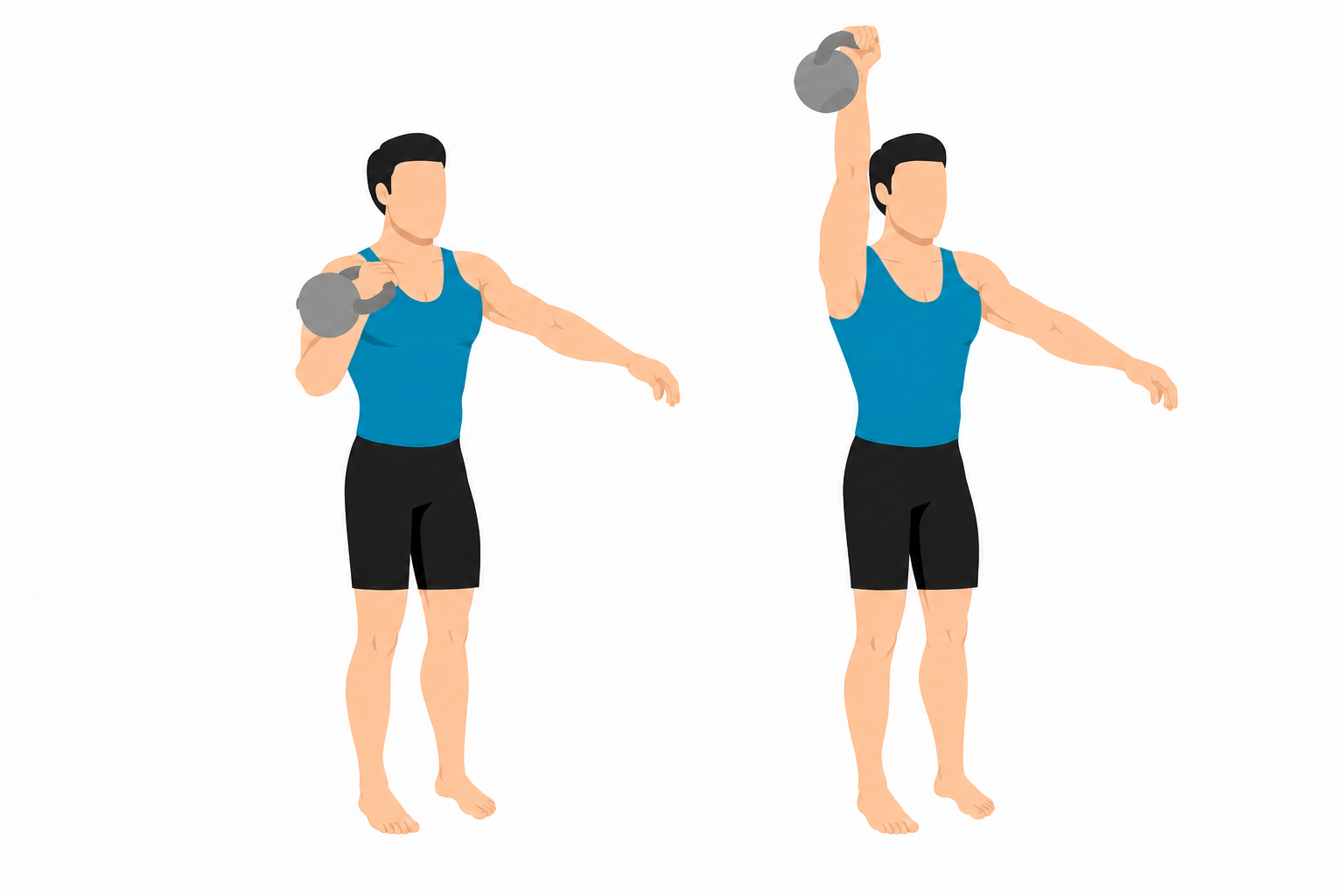
Now that you have mastered how to perform a 2-part overhead lift, let’s replace your exercise bar with a kettle bell. The kettlebell offers a unique pendulum effect that mimics daily lifting tasks. When progressing from bilateral (both hands) to unilateral (single hand) lifting we must discuss counter forces. momentum is a 4-letter word in the Healthy Posture System. Conditioning yourself to perform all exercises without accessory motions in the spine is important for injury prevention and long-term injury management. You are about to start the “cyborg” phase of fitness conditioning.
1. Get into neutral Spine Alignment
Stack your upper back via a chest lift, position your skull in its neutral position on Ci via a head nod, unload your low back via a pelvic curl. Inward spiral your hips to restore neutral positioning at the hip joint to support your pelvic curl. Position your feet next to each other no more than the length of one of your feet away from each other. This reinforces neutral standing posture. Maintain equal weight bearing through the inside and outside of your feet via an inward spiral of the hips. Keep equal weight on the left and right foot throughout the exercise.
Key Fitness Tip: You should always have a similar weight in both hands when performing kettlebell presses. This prevents a side bend torque in the cervical spine. Let’s break down how to progress your overhead lift to include kettlebells.
2. Plane of the Scapulae
The scapulae (shoulder blade) sit at an angle on the rib cage, placing the socket of the shoulder halfway between forward flexion plane and lateral abduction plane. We refer to this as the “neutral scapular plane”. Lifting within the neutral scapular plane provides another level of stability to overhead lifts. We only perform overhead lifting within the neural scapular plane for the first 9 levels of the Healthy Posture System™.
Your kettlebell should hang by your side about 4-6” away from your pelvis at the start of the movement. Your elbows should be in front of your rib cage at the start of your 2-part overhead kettlebell lift.
Movement #1: The Curl
- Enty Level: You can start with a traditional bicep curl to get a hang of how to control the kettle bell. Start with your palm facing forward when doing to initiate the lift. A traditional bicep curl (palms up) isolates the biceps brachii. Perform a complete bicep curl until the kettlebell taps your shoulder.
- Progression #1: After a few weeks, progress to a reverse bicep curl strategy. A reverse bicep curl is when the curl starts with your palm facing you (forearm pronated). This requires that the kettle bell flips during the curl. This is our first introduction of momentum into the Healthy Posture System™.
Movement #2: Shoulder Press
- Entry Level: You can start with a traditional bicep curl to get a hang of how to control the kettle bell. Start with your palm facing forward when doing to initiate the lift. A traditional bicep curl (palms up) isolates the biceps brachii.
- Progression #1: When the kettlebell taps the shoulder, flip the kettlebell so that your palm is facing forward, then press into overhead Y position.
Never press all the way overhead, always press in front of your forehead so that you see the bar in your peripheral vision. The shoulder has no structural integrity when we press overhead. Press in front of you slightly when you lock out your elbows, you should see the exercise part in your peripheral vision at the end of a healthy overhead press. At this level of conditioning, we are looking for you to move like a cyborg without any accessory motions in the spine
3. Locking the Elbows
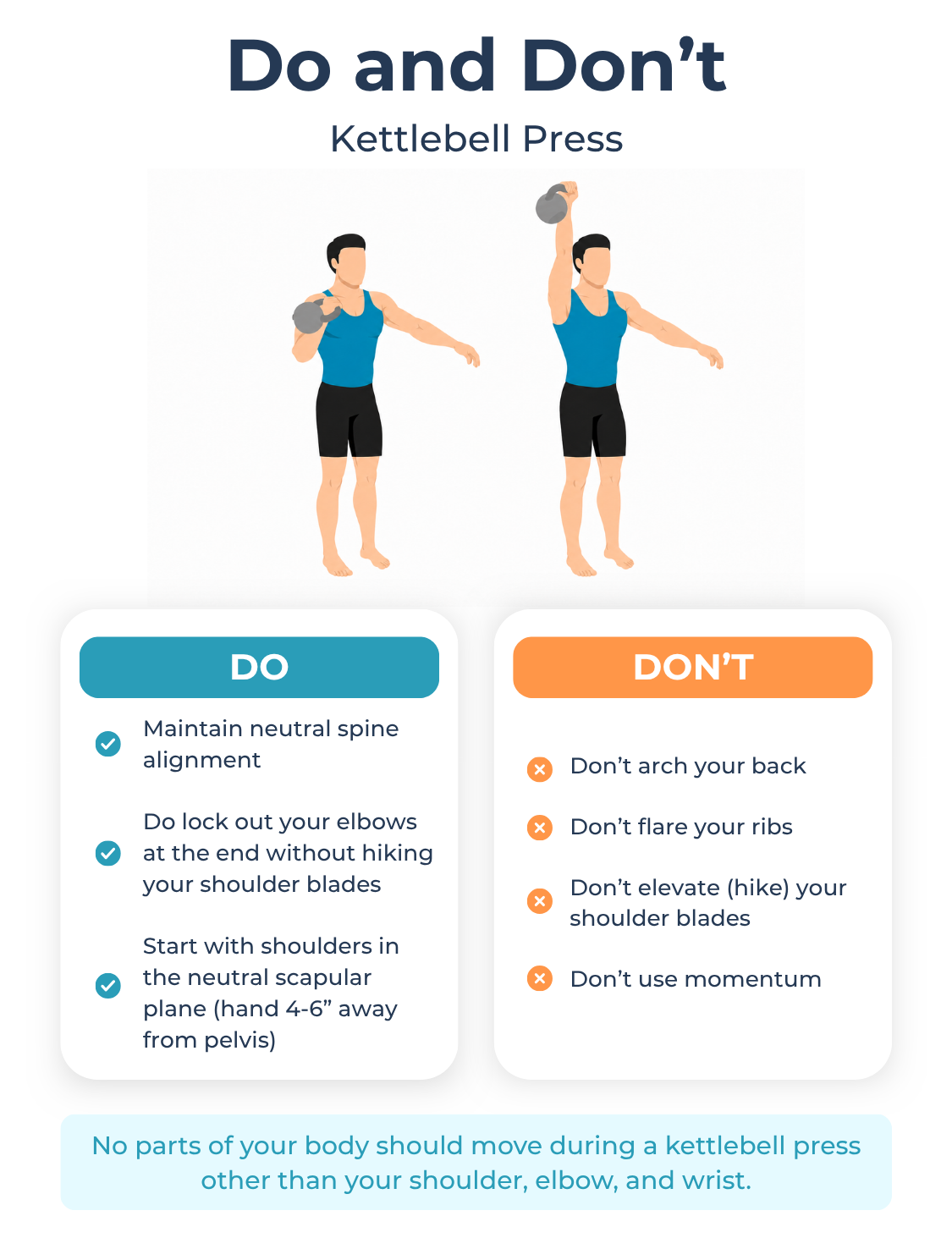
The key to ensuring that your overhead press strengthens your neck stabilizers is to lock the elbows at the end of your overhead press without hiking your shoulder blades or flaring your ribs. This is the quickest way to break faulty loading patterns in the neck and strengthen the neck stabilizers functionally. It is also an effective way to release muscle tensions that cause faulty scapular and first rib positioning.
You know you are performing this exercise properly when you feel your abdominals during the overhead press.
Summary:
The 2-part kettlebell press is a safe way to strengthen the upper body for sports that require overhead lifting without overloading the cervical spine. It can be used to strengthen your ability to lift objects overhead without faulty loading patterns in the neck and/or low back.
Safe Progressions:
When you can perform 8 perfect 2-part overhead presses within the neutral scapular plane, progress to diagonal 2-part presses (drawing the swords). At level 10 of the Healthy Posture System we teach kettle bell swings to prepare for more aggressive overhead sports conditioning.